




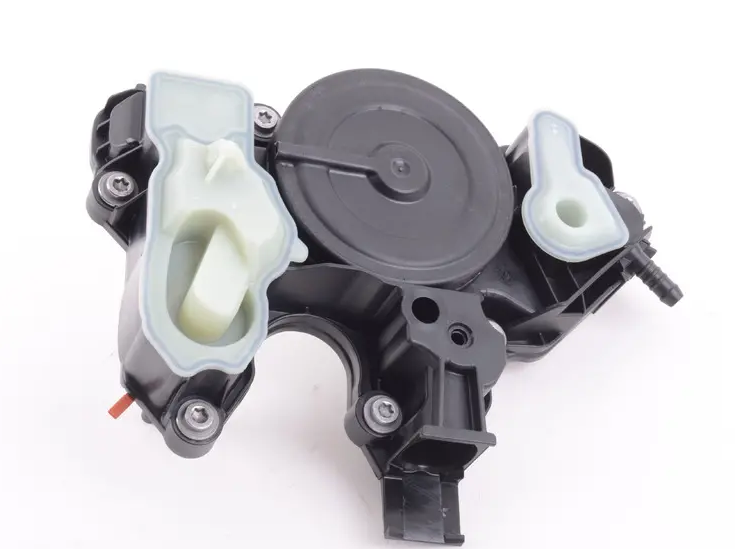
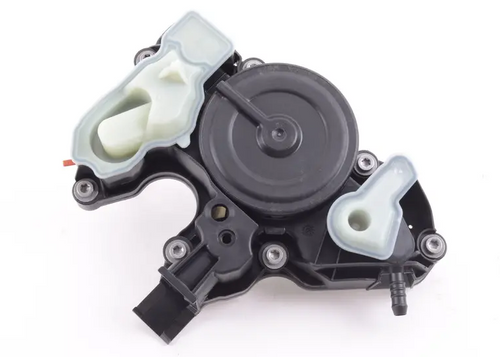
For the 3rd generation of the EA888 engines, the positive crankcase ventilation system (PCV), has been improved in various ways. For example, there has been a reduction in the number of components to now include only 1 pipe for the discharge of cleaned blow-by gases. The Gen 3 PCVs also use a vertical Cyclone separator as opposed to the Gen 1 variant which uses a horizontally pitched design. Because of the newly improved design, carbon cleaning of the valves has been delayed whereas the Gen 1 engines (Engine Codes CCTA/CBFA) typically needed a cleaning around 60-70k miles, the Gen3 engines now typically require a cleaning around 100k miles. (Estimated averages and will vary depending on driving style and other variables)
The EA888.3 PCV System is comprised of the following:
- A Coarse Oil Separator which is integrated into the engine block
- A Fine Oil Separator Module which is bolted on the cylinder head
- A Hose for the discharge of cleaned blow-by gases
- And an oil return line in the engine block with a shutoff valve in the oil pan (honeycomb) insert which resides below the oil level in the oil pan
If your PCV is making noise, which is usually caused by a ripped diaphragm, or you're noticing oil leaks, oil consumption, or smoke emitting from your tailpipe, you may need a new PCV Valve.
Engine Oil Separator
The engine crankcase vent valve, also referred to as the PCV (Positive Crankcase Ventilation) valve, is part of a vehicle’s emission control system. It helps manage the pressure inside the engine’s crankcase by allowing gases that build up in the crankcase to be vented back into the intake manifold. These gases are then burned in the combustion process, reducing harmful emissions. The PCV valve also prevents oil contamination and helps maintain proper engine performance by controlling the amount of blow-by gases (unburned fuel and air mixture) escaping from the combustion chamber.
Engine Oil Separator Failure Symptoms
- Rough Idle or Engine Misfire: A faulty or clogged PCV valve can cause the air-fuel mixture in the engine to become unbalanced, leading to rough idling or even engine misfires, especially when the car is idling.
- Oil Consumption: A faulty vent valve can cause pressure to build up inside the crankcase, which may push oil out through seals or gaskets, resulting in oil leaks. Excessive pressure can also force oil into the intake manifold, leading to increased oil consumption.
- Sludge Buildup: If the valve is stuck closed or blocked, the blow-by gases can’t escape the crankcase properly. This can cause condensation and oil to mix, forming sludge inside the engine. This sludge can block oil passages, leading to lubrication issues and engine damage over time.


